The Mechanics Behind Free Play Allocations and Their Impact on Repeat Visits in Online Gaming
Written by Quinn Berger · Aug 6, 2026

The Mechanics Behind Free Play Allocations and Their Impact on Repeat Visits in Online Gaming
Online gaming platforms have developed sophisticated loyalty systems that allocate free play credits to participants based on activity levels, and these mechanisms encourage return visits through structured reward cycles. Data from industry reports indicate that operators track player engagement metrics such as deposit frequency and session duration to determine free play amounts, which in turn create incentives for continued participation. According to the American Gaming Association, loyalty programs across digital platforms processed over 2.3 billion in reward allocations during the previous fiscal year, with free play representing a significant portion of those distributions.
How Allocation Systems Calculate and Distribute Free Play Credits
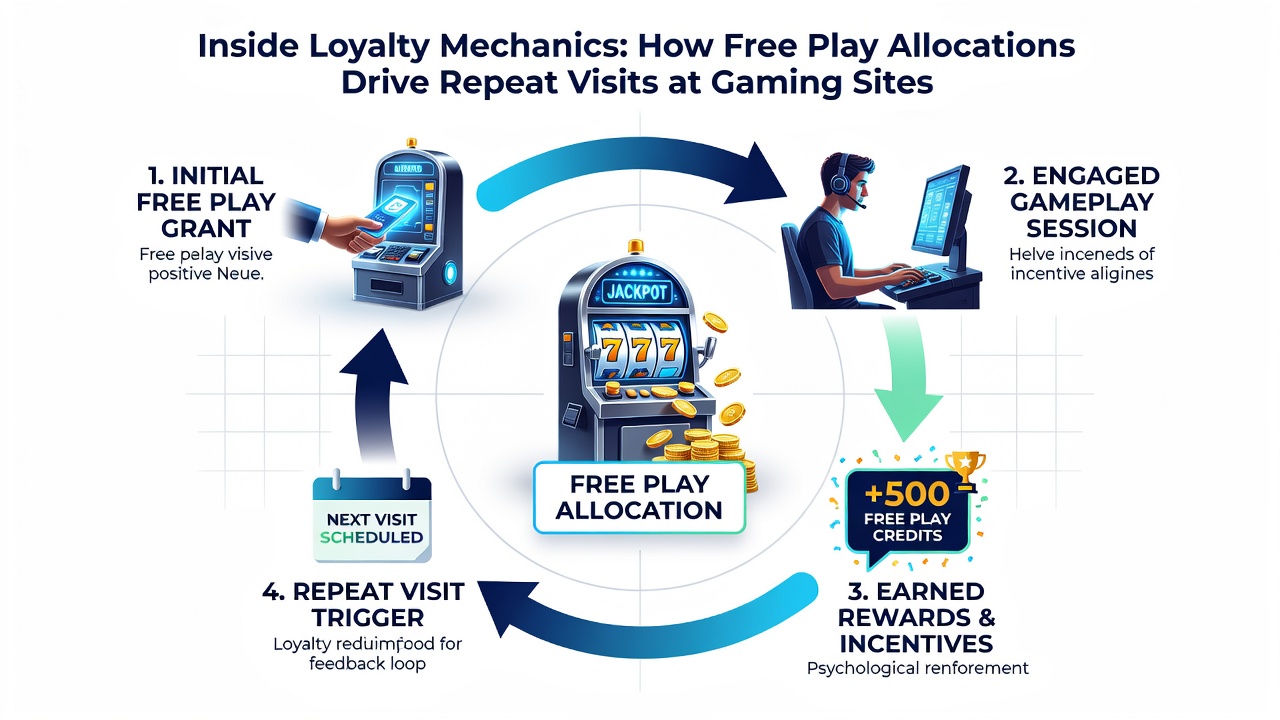
Operators employ algorithms that assess wagering volume, game types selected, and account tenure to assign free play values, and these calculations often occur in real time as players complete qualifying actions. A player who reaches a designated threshold in total bets might receive credits equivalent to a percentage of that activity, which then become available for use on selected titles within a defined window. Research from university studies on behavioral economics shows that such timed allocations prompt users to log back in before expiration dates, thereby increasing session frequency over extended periods.
Platforms segment users into tiers where higher levels unlock larger free play pools, and this tiered structure relies on consistent data collection from multiple visits to maintain or advance status. Those who study player retention patterns note that the visibility of upcoming allocations in account dashboards serves as a prompt for return activity, since participants can preview potential rewards tied to future deposits or playtime.
Regional Regulatory Approaches to Loyalty Mechanics
Regulatory bodies in various jurisdictions monitor how free play allocations integrate with responsible gaming measures, and guidelines from the Nevada Gaming Control Board emphasize transparent communication of reward terms to participants. In contrast, Australian state authorities require operators to disclose allocation formulas in player agreements, which affects how sites structure their loyalty communications. Canadian provincial frameworks add another layer by mandating audit trails for reward distributions, ensuring that free play credits align with documented player activity records.
Player Behavior Patterns Linked to Free Play Timing
Analytics platforms record that free play credits issued mid-week generate higher redemption rates compared to weekend distributions, and this timing influences when participants schedule their next sessions. Observers note that sites often stagger allocations across user bases to smooth traffic loads, yet the effect remains consistent in driving logins during otherwise lower-engagement periods. Figures from trade group publications reveal that players receiving weekly free play increments demonstrate a 34 percent increase in monthly active days relative to those without such allocations.
Case examples from major operators illustrate how targeted free play campaigns around seasonal events, including promotions planned for August 2026, correlate with measurable upticks in return visits. These campaigns combine allocation notices with personalized game recommendations, and the combination appears to sustain engagement across multiple weeks rather than single isolated sessions.
Technical Infrastructure Supporting Allocation Delivery
Backend systems integrate player databases with reward engines that process eligibility checks within seconds of a qualifying action, and this speed allows sites to display available credits immediately upon login. Integration with payment processors further enables seamless conversion of free play into additional wagering opportunities once initial credits are exhausted. Industry reports from the European Gaming and Betting Association highlight that robust API connections between loyalty modules and game servers reduce friction in credit application, which supports uninterrupted play sequences.
Security protocols encrypt allocation data during transmission, and compliance teams conduct periodic reviews to verify that distributions match activity logs without discrepancies. Those who manage these systems emphasize that accurate tracking prevents both over-allocation and under-delivery, maintaining participant trust in the mechanics.
Conclusion
Free play allocations function as a core component within loyalty frameworks at gaming sites, where calculation methods, regulatory oversight, and delivery timing collectively shape patterns of repeat visits. Data indicates that structured rewards tied to ongoing activity levels sustain participation across diverse player segments, and technical systems ensure consistent execution of these programs. As platforms refine these approaches through 2026 and beyond, the underlying mechanics continue to center on measurable engagement metrics that link allocations directly to visit frequency.