How Deposit Thresholds Alter the Value Proposition of No Deposit Incentives Over Multiple Play Sessions
Written by Ellis Beck · Jun 25, 2026
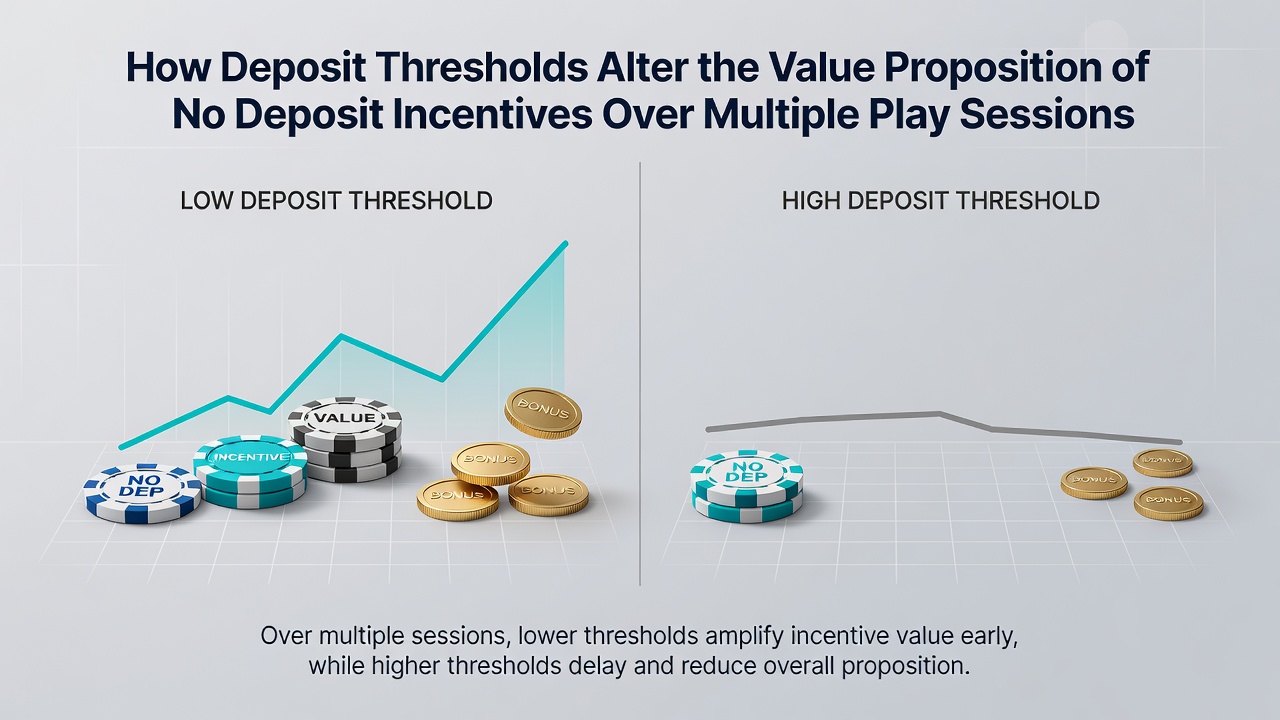
Deposit Thresholds and the Evolving Appeal of No-Deposit Offers in Multi-Session Play
No-deposit incentives have long served as entry points for new players at online casinos, yet their effective value shifts once deposit thresholds enter the equation over repeated sessions. These thresholds typically require a minimum deposit before players can access withdrawals, unlock additional features, or extend bonus eligibility. Data from industry analyses shows that such requirements often recalibrate the initial advantage presented by no-deposit offers, particularly when gameplay stretches across multiple days or weeks. Understanding these mechanics begins with the structure of no-deposit bonuses themselves. Casinos commonly award free spins or small cash credits upon registration, subject to wagering requirements that range from 20x to 50x the bonus amount. Research from academic sources indicates that players who complete these requirements within a single session encounter fewer obstacles, whereas those who pause and return later face added conditions tied to deposit thresholds. For instance, many platforms enforce a rule where any winnings above a certain figure cannot be cashed out until a deposit of at least £10 or equivalent occurs.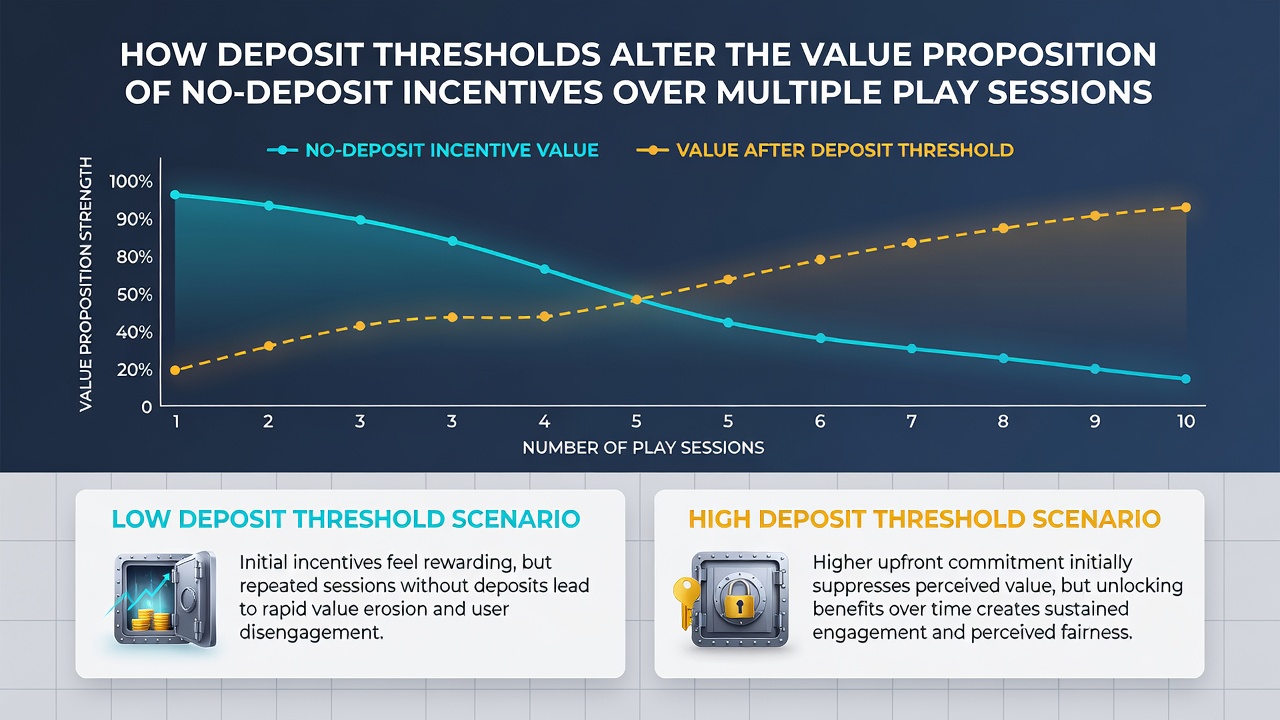
No-deposit incentives have long served as entry points for new players at online casinos, yet their effective value shifts once deposit thresholds enter the equation over repeated sessions. These thresholds typically require a minimum deposit before players can access withdrawals, unlock additional features, or extend bonus eligibility. Data from industry analyses shows that such requirements often recalibrate the initial advantage presented by no-deposit offers, particularly when gameplay stretches across multiple days or weeks. Understanding these mechanics begins with the structure of no-deposit bonuses themselves. Casinos commonly award free spins or small cash credits upon registration, subject to wagering requirements that range from 20x to 50x the bonus amount. Research from academic sources indicates that players who complete these requirements within a single session encounter fewer obstacles, whereas those who pause and return later face added conditions tied to deposit thresholds. For instance, many platforms enforce a rule where any winnings above a certain figure cannot be cashed out until a deposit of at least £10 or equivalent occurs.Mechanics of Deposit Thresholds in Practice
Deposit thresholds function as gatekeepers that activate after initial bonus engagement. They appear in terms that specify minimum funding amounts needed to convert bonus winnings into withdrawable cash or to maintain eligibility for ongoing promotions. Observers note that this structure encourages continued platform interaction while simultaneously introducing financial commitments absent from pure no-deposit scenarios. Figures from gaming reports reveal that thresholds often sit between £5 and £20, though regional variations exist depending on operator policies and local regulations. When applied across multiple play sessions, these thresholds alter perceived value in measurable ways. A player who claims a no-deposit bonus on day one might generate winnings but then encounter restrictions upon attempting withdrawal during a second session. According to data compiled by the Australian Gambling Research Centre, such interruptions lead to extended play periods as individuals deposit to bypass limits, thereby increasing overall spend relative to the original bonus size. This pattern holds especially when bonuses carry expiration dates that span several days, forcing decisions about additional deposits to preserve progress.Effects on Player Retention and Session Patterns
Multiple-session dynamics introduce further complexity because deposit thresholds interact with loyalty programs and progressive wagering trackers. Casinos frequently reset or adjust bonus progress when players log in after inactivity, which means thresholds can compound over time. Studies from the University of Nevada's gaming research division demonstrate that players who spread activity across three or more sessions encounter cumulative deposit demands that reduce the net benefit of the initial no-deposit incentive by up to 40 percent in some tracked cases. These adjustments occur because platforms aim to balance promotional costs with revenue generation from funded accounts. What's interesting here involves how thresholds influence session length and frequency. Shorter sessions may avoid triggering certain deposit rules, yet longer or repeated visits often activate them through accumulated play metrics. Industry organizations such as the European Gaming and Betting Association have documented that operators in regulated markets adjust threshold levels seasonally, with updates noted around mid-2026 reflecting broader compliance shifts in digital gaming oversight. Players who monitor these changes find that timing deposits strategically after the first session can preserve more of the original bonus value than reacting later.