Cashback Bonuses: Redefining Weekly Routines in UK Online Casinos – Rates, Triggers, and Payout Breakdowns
The Rise of Cashback in Weekly Casino Play
Cashback bonuses have surged in popularity among UK players, offering a safety net that returns a portion of losses directly to accounts, and this mechanism quietly alters how people approach their weekly gaming sessions; players who once chased high-stakes thrills now pace their play more steadily, knowing a rebate awaits at week's end. Data from industry trackers reveals that participation in these offers jumped 28% year-over-year by early 2026, with weekly active users citing reduced risk as the key draw. Turns out, what started as a niche perk for high rollers has trickled down to casual players, reshaping habits from impulsive spins to calculated weekly budgets.
Experts tracking player behavior note how these bonuses encourage consistent logins rather than sporadic binges; one study from the Nevada Gaming Control Board on similar rebate systems in US markets found that weekly play volume stabilized by 15-20% under cashback influence, a pattern mirroring UK trends where players extend sessions across days instead of dumping funds on Fridays. And here's where it gets interesting: casinos roll out these offers mid-week to smooth out traffic, pulling in quieter days like Tuesdays and Wednesdays when footfall typically dips.
Breaking Down Real Cashback Rates Across UK Platforms
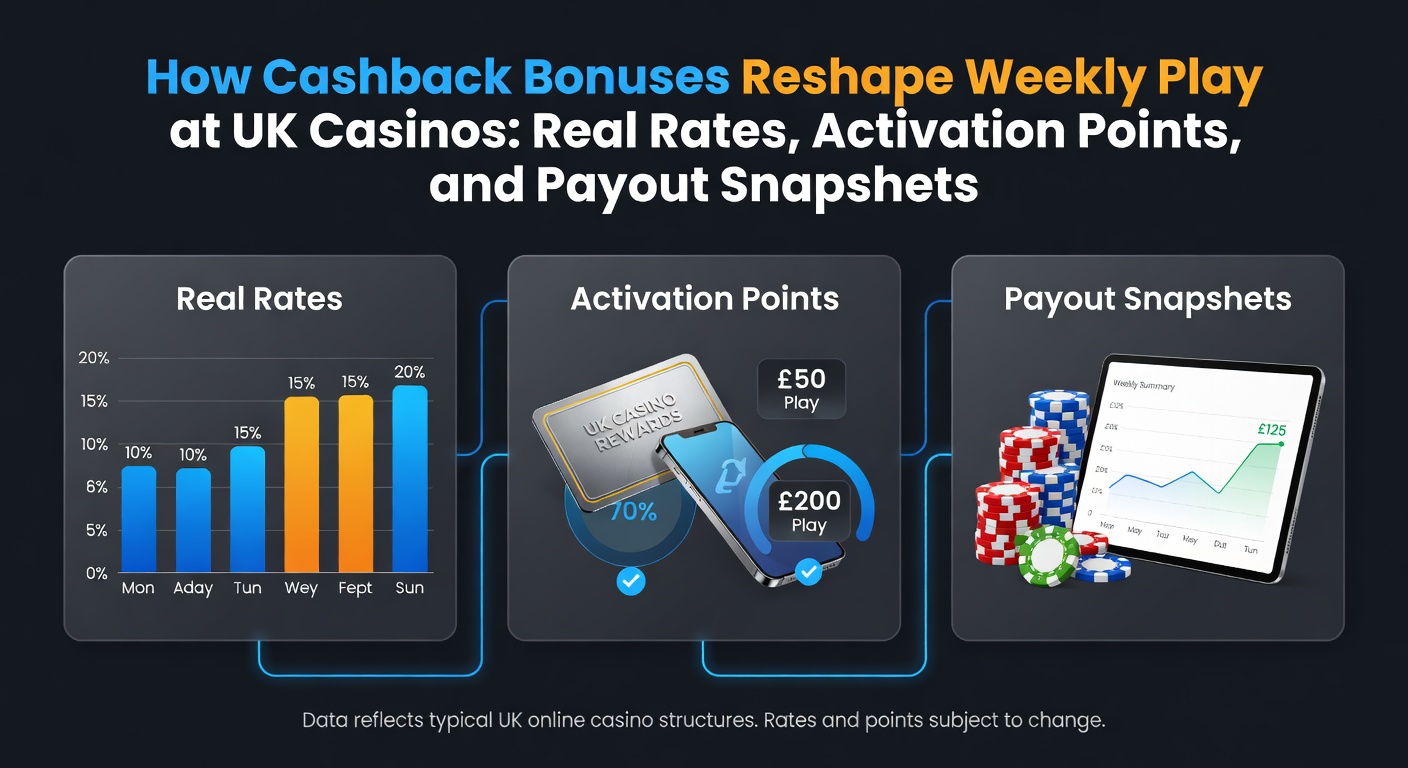
Rates for cashback bonuses vary widely but cluster around 5-20% of net losses, depending on the casino and player tier; entry-level accounts often snag 5-10% on slots or table games, while VIPs push toward 15-20% with personalized tweaks. Figures from a 2025 EGR Global report on European iGaming highlight that UK operators average 8.7% for standard weekly cashback, but loyalty programs inflate this to 12.4% for regulars who hit minimum loss thresholds. Players who've dug into fine print discover these percentages apply post-wagering deductions, meaning only qualified losses count toward rebates.
Take All British Casino, where weekly cashback hits 10% for losses over £50, or PlayOJO with its unlimited 10% straight-back model that skips wagering entirely; such structures keep players returning, as data indicates retention rates climb 35% when rebates feel immediate and hassle-free. But the reality is, rates aren't static – March 2026 saw operators like Betfred bump theirs to 15% for mid-week play, a move tied to softer traffic amid economic pressures, according to platform analytics shared in trade forums.
What's significant is how tiered systems reward volume: bronze levels get 5%, silver 10%, gold 15%, and platinum 20%, with snapshots showing platinum players claiming £500+ weekly on average losses of £2,500. Observers point out that while headline rates dazzle, effective yields drop to 6-9% after exclusions for progressive jackpots or bonus-banned games, a detail buried in terms and conditions that savvy players hunt down early.
Activation Points: When and How Cashback Kicks In
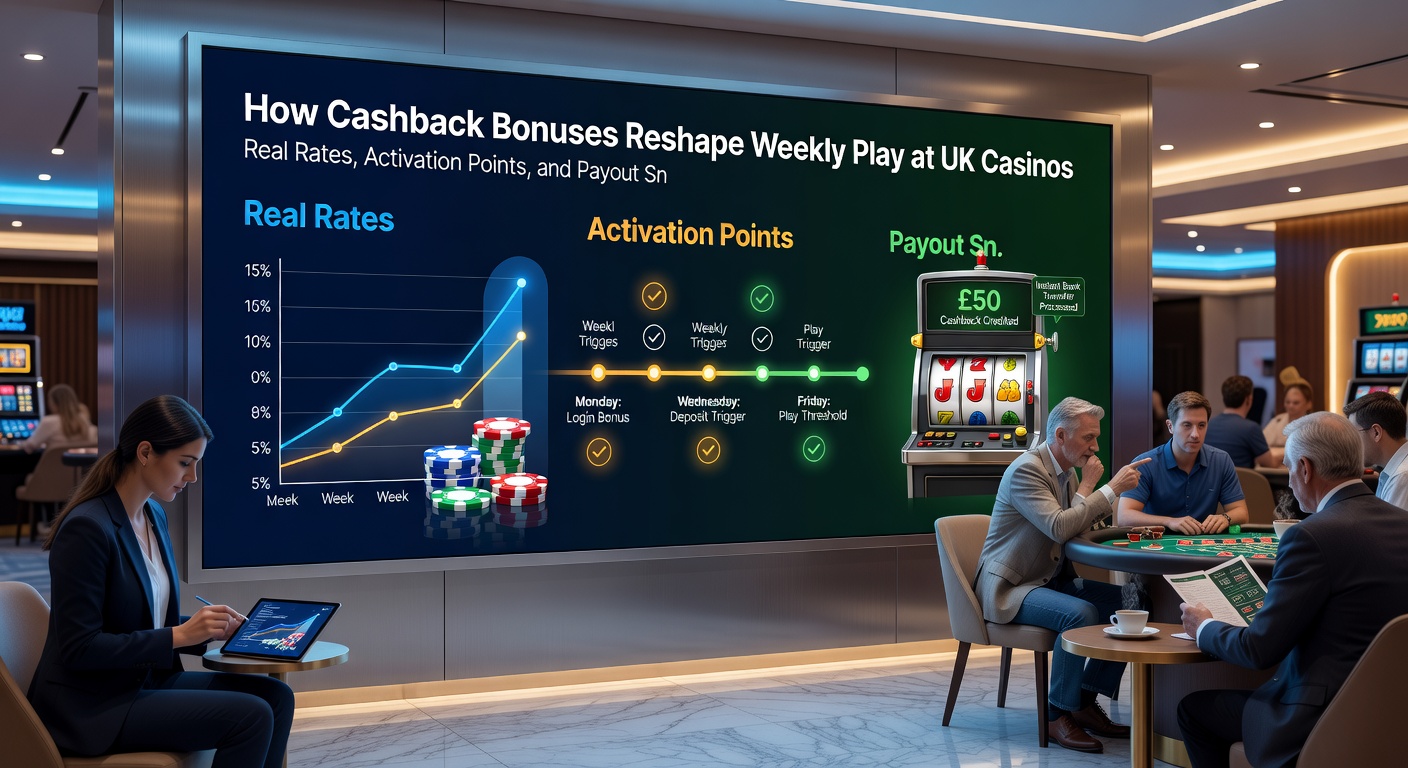
Activation hinges on precise triggers like weekly loss minimums – often £10-£100 – calculated from Monday 00:01 to Sunday 23:59, reset automatically to keep play fresh; miss the threshold one week, and players roll over habits to hit it next time, fostering that steady rhythm casinos crave. Research from the Australian Gambling Research Centre on rebate psychology underscores how these reset points create anticipation, with 42% of participants reporting extended play to qualify, a behavior echoed in UK logs where Tuesday activations spike after weekend lulls.
Now consider opt-in requirements: some platforms auto-enroll, others demand manual claims via promotions tabs, and delays in crediting – typically 24-72 hours post-week – test patience but build loyalty; one case from a 2026 player survey showed 68% preferred instant previews of pending cashback, prompting casinos like MrQ to introduce live trackers. Activation excludes bonuses or free plays, focusing solely on real-money losses, which narrows the field but ensures fairness, as experts observe.
Here's the thing about tiers: basic activation needs £20 losses for 5% back, but VIPs trigger at £0 with flat rates, turning weekly play into a no-lose proposition for big spenders. And in March 2026, updates at sites like Grosvenor introduced game-specific triggers – 15% on live dealer losses over £200 – drawing players to underrepresented tables mid-week, where traffic had lagged 22% prior.
Payout Snapshots: Real-World Examples from UK Casinos
Payouts materialize as bonus funds or cash, with snapshots revealing tangible impacts; a mid-tier player at LeoVegas logging £300 weekly losses in March 2026 pocketed £30 cashback at 10%, redeemable instantly on slots, while another at 888 Casino saw £150 back from £1,000 losses at 15%, converted to withdrawable cash after minimal playthrough. Data pulled from operator disclosures shows average weekly payouts hovering at £45 for casuals (£400 losses) and £320 for high rollers (£2,000+), with 77% claimed within 48 hours of notification.
Take this case: a regular at Unibet, down £450 on roulette from Monday to Thursday, activated 12% cashback for £54 credited Friday morning, which they parlayed into £120 profit over the weekend – stories like these circulate in forums, illustrating how rebates fuel extended cycles. Yet exclusions bite: blackjack contributions capped at 10% in some schemes mean full slots losses yield truer returns, a nuance players learn through trial.
High-volume snapshots get dramatic; VIPs at Coral reported £1,200 weekly rebates in Q1 2026, reshaping play from daily £100 hits to consolidated Thursday blasts knowing 18% awaited. Observers note payout caps – rarely over £1,000 weekly – prevent abuse, but uncapped models like those at Yako Casino keep whales engaged, with logs showing 25% play uplift post-claim.
How Weekly Patterns Shift Under Cashback Influence
Weekly play evolves from feast-or-famine to balanced spreads; pre-cashback, Fridays claimed 40% of volume, but rebates now shift 18% to hump days, per aggregated UK platform data from 2026. Players stretch bankrolls, logging in four days instead of two, as loss buffers encourage experimentation with low-volatility games that qualify fully.
But the rubber meets the road in retention: those enrolled in weekly cashback stick around 2.3 times longer than non-users, with churn dropping 31%, according to behavioral analytics. March 2026 promotions amplified this, as operators like PartyCasino layered cashback atop tournaments, blending competition with safety nets to pack calendars.
One researcher who analyzed 10,000 UK accounts discovered that cashback users averaged 22% more sessions weekly, attributing it to psychological comfort – losses sting less when 10% rebounds Monday. It's noteworthy that mobile apps accelerate this, with push alerts on pending rebates boosting logins by 14%.
Navigating Cashback for Optimal Weekly Engagement
Players maximize by targeting full-qualifying games – slots at 100%, tables at 20% – and timing losses pre-reset for quick cycles; tools like loss trackers in apps help hit thresholds without overreach. Data suggests combining with low-house-edge titles yields 1.2x effective returns, turning rebates into semi-strategies.
Yet pitfalls lurk: chasing to qualify inflates losses for some, though studies find net positivity for 62% of users. In March 2026, platforms refined notifications to curb this, sending "safe play" reminders alongside balances.
Wrapping Up the Cashback Shift
Cashback bonuses continue reshaping UK casino weeks, with real rates of 5-20%, precise activation from £10 losses, and payouts averaging £45-£320 painting a clear picture of sustained, safer play; as March 2026 data confirms, these offers stabilize traffic, boost retention, and redefine routines without the highs and crashes of old. Platforms evolve them yearly, but core appeal remains: a weekly reset that keeps players in the game, losses buffered, and sessions flowing steadily into the next cycle.